
ECOSOC Youth Forum 2026: From Research to Communities: Youth Bridging Generations for Ethical and Inclusive AI
The event, organized by UNESCO as part of the ECOSOC YOUTH FORUM 2026, was open by presentations of the laureates of the UNESCO–Uzbekistan Beruniy Prize for Scientific Research on the Ethics of Artificial Intelligence, among which AUP’s Professor Roda.
Professor Roda highlighted two fault lines in today’s AI landscape. A handful of companies now control what we see online, our medical records, our behavioral data, and strategic information increasingly weaponized in armed conflict. They operate beyond the reach of local laws and have grown powerful enough to shape legislation rather than comply with it. Meanwhile, AI development has drifted from what is genuinely useful (science, health, education) toward short-term profit, widening inequalities, eroding democratic structures, and depleting environmental resources. These aren’t abstract concerns: AI already shapes how children learn, how medical care is delivered, how laws are applied, and who gets hired.
Solving these problems, she argued, requires political will, regulation, technical innovation, and ethics. To address the need for professional figures capable of moving across such different domains, AUP has built a Master’s program in Human Rights and Data Science, bridging technical, legal, and ethical dimensions.
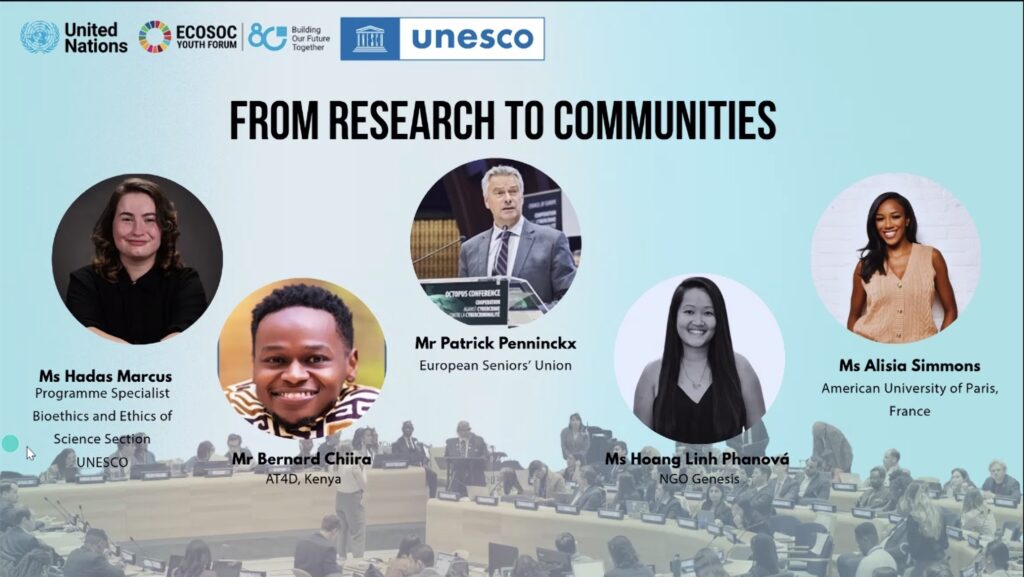
Two students from AUP’s Master’s program in Human Rights and Data Science, Hadas Marcu and Alisia Simmons, contributed to the conversation
Professor Roda closed with a message for all youth involved in this domain: don’t let anyone tell you what technology can or cannot do. It must adapt to our values and laws, not the reverse. Share your vision, even when it feels impossible. The impossible has a way of becoming ordinary when enough people commit to making it real.